Specialized Conveyor Systems
Don't just move material. Engineer the flow.
Product, carton and pallet conveying, accumulation, transfer, indexing, heavy-duty and fully custom conveyor systems — designed around product behaviour, line balance and the machines on both ends.
- Input 01
- Accumulation 02
- Transfer 03
- Inspection 04
- Robot 05
- Output 06
The challenge
Conveying decides how a line behaves.
Products waiting between processes, unstable transfers and unbuffered lines are conveying decisions, not machine faults.
- Work-in-progress accumulating between operations
- Product instability, tipping or jamming at transfer points
- No accumulation, so one stoppage halts the entire line
- Manual movement of cartons or pallets between areas
- Heavy or awkward loads requiring purpose-built structures
The solution
Conveying engineered as a material flow system.
We design conveying from the product characteristics, required rate and the handshake with upstream and downstream equipment.
- Flow mapping across the full route, not one conveyor at a time
- Accumulation zones sized against realistic stoppage behaviour
- Transfer, indexing, merging and diverting designed for the product
- Heavy-duty and pallet conveying with structural and drive sizing
- Integration with robot cells, inspection and packing machines
How the system works
A typical engineered conveying route
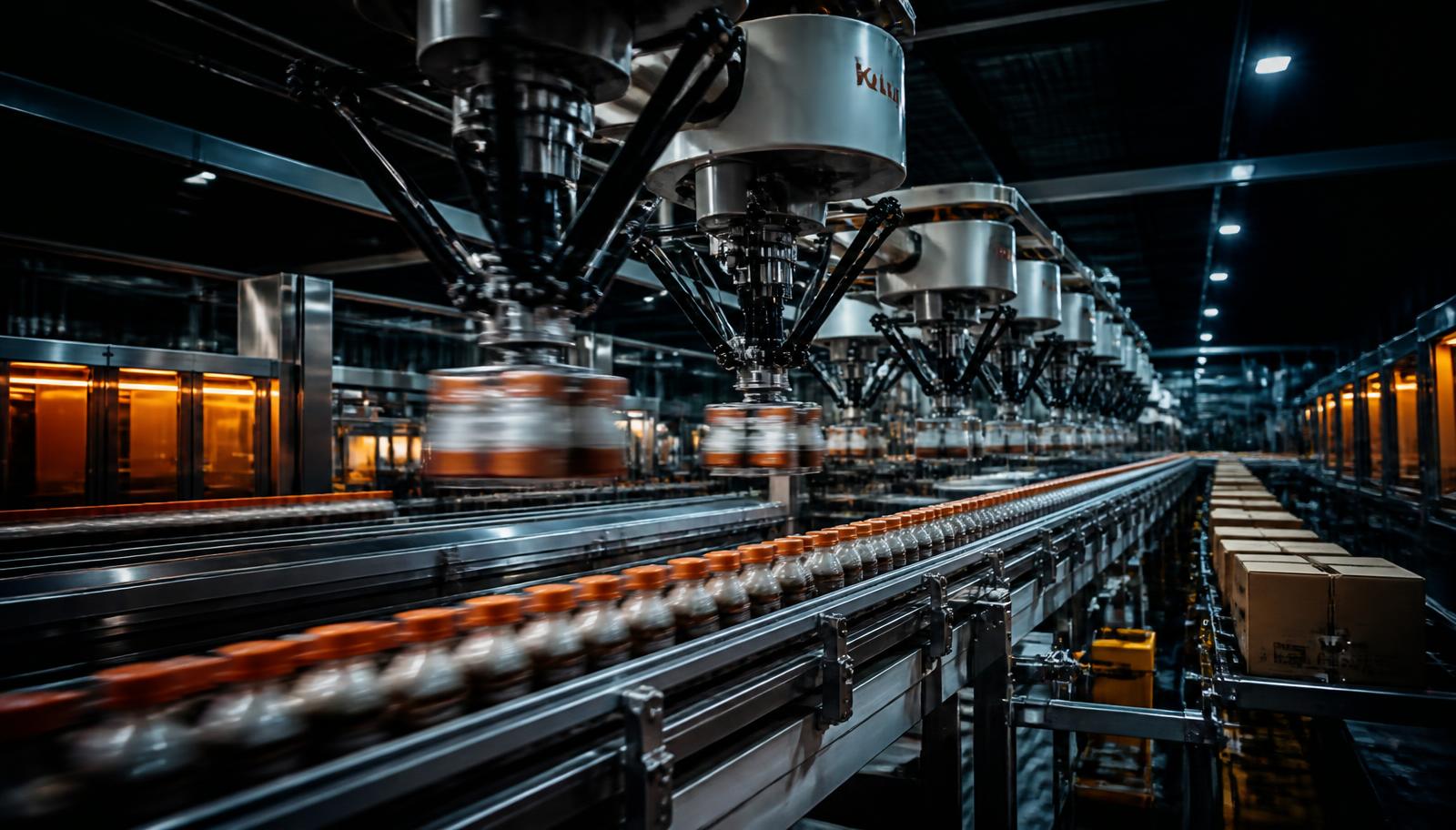
- Input from the upstream machine at variable discharge rate 01
- Accumulation buffer absorbs downstream stoppages 02
- Transfer, alignment and indexing to a controlled pitch 03
- Inspection or verification station in-line 04
- Feed into the robot cell or packing operation 05
- Output conveying to wrapping, dispatch or the next process 06
System components
What the engineered system includes.
Product conveying
Carton & case conveying
Pallet conveying
Accumulation systems
Transfer & indexing
Controls integration
Industries
Where this is applied.
- Pharmaceutical carton and case movement
- Food and FMCG high-speed conveying
- Tyre and heavy-duty material handling
- Automotive component and pallet flow
Design inputs
What we need to design the system.
Sharing these upfront lets us respond with a concept instead of a questionnaire.
- Product type, base condition, weight and dimensions
- Required throughput and accumulation time
- Route layout, elevation changes and available corridors
- Interfaces with upstream and downstream machines
- Washdown, GMP or environmental requirements
Technical FAQ
Questions engineering teams ask us.
Q What makes a conveyor system 'specialized'?
It is designed for a specific product, rate and route rather than assembled from standard lengths. Accumulation, transfers, guiding and controls are engineered against how the product actually behaves.
Q How much accumulation does a line need?
It depends on the frequency and duration of downstream stoppages and the upstream discharge rate. We size buffers from observed line behaviour so short stoppages never reach the packing machine.
Q Can conveyors be integrated with existing machines?
Yes. We work from existing discharge heights, machine interfaces and controls platforms so the new sections handshake correctly with what is already installed.
Q Do you handle GMP or washdown environments?
Material selection, construction and drainage are specified against the plant's hygiene and cleaning requirements at the design stage.
Send us your material flow route.
Send your line layout, product data and current cycle time. We will revert with a preliminary automation concept.